
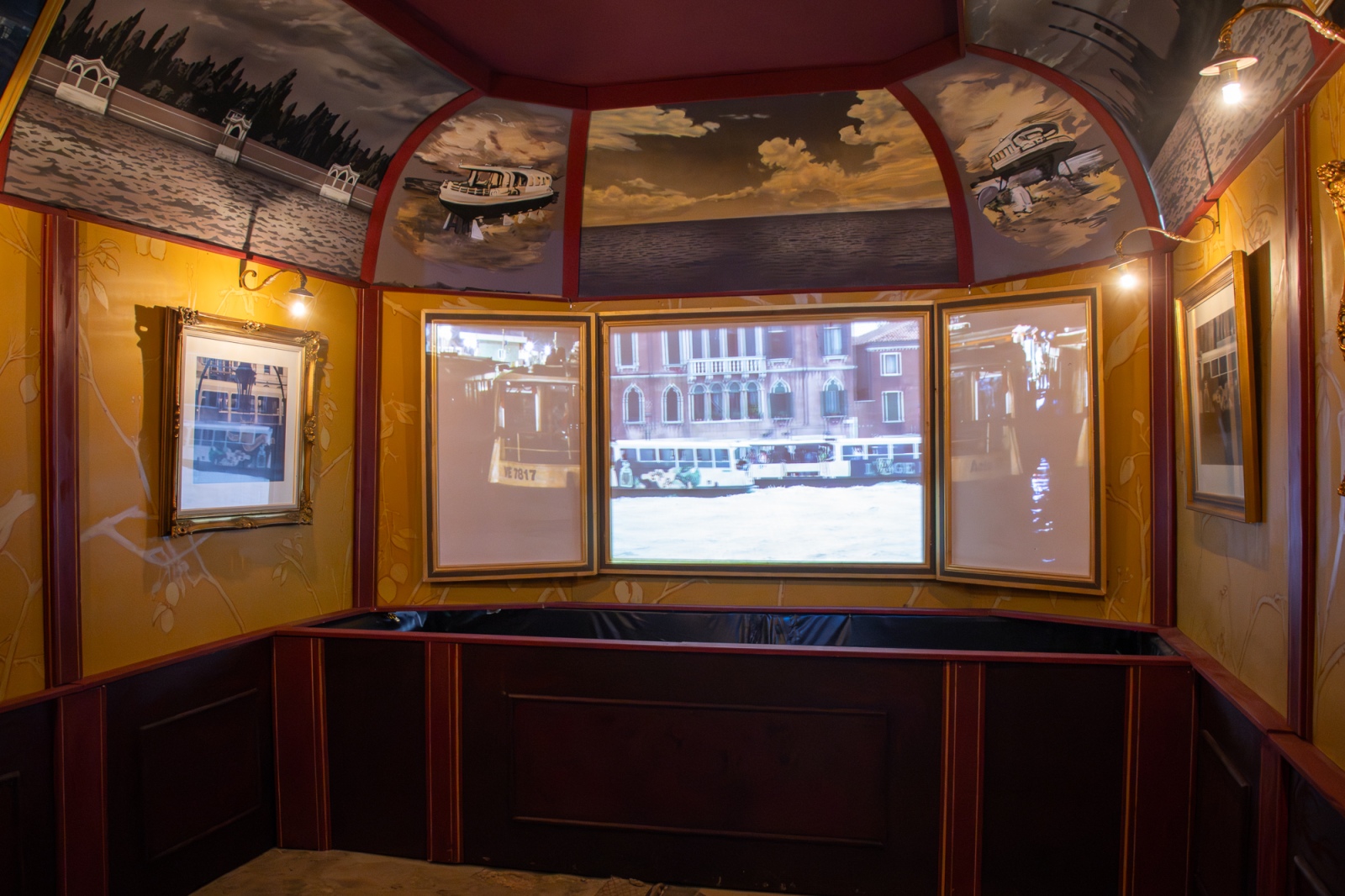
Description
In the 1970s and 1980s, the New York subway was bombed – painted from top to bottom, insides and outsides – inspiring a global movement that would spread to all surface and underground transport networks: Graffiti Writing. A few decades later, the German collective Zelle Asphaltkultur arrived in Venice. Inspired by the power of the movement, ZA dreamt of painting the only virgin metro system left in the world. But it was clear from the beginning that it would not be so simple.
The city of Venice has retained its fairy-tale appearance almost unchanged for centuries. Despite provocative projects promoted by artists and intellectuals in the 20th century, the city resists modernisation due to its nature as a small, dense island: even today, one can see the same views that Canaletto painted, the same masks that colour the Carnival, the same gondolas in the canals. The city evokes a sense of nostalgia in its visitors, the dream of a past that invariably seems better than the present.
‘L'Age d’Or’: so reads a phrase on the side of a vaporetto – a waterbus belonging to the public transport network operated by ACTV. The letters are ironically baroque and golden on a black background: it passes along the Grand Canal, packed with tourists, under the gaze of other tourists, evoking that sentiment which is, however, immediately negated by the loud noise of its propeller and the black smoke from the exhaust pipe on the roof.
The installation at the Urban Art Biennale displays documentation of around twenty vaporetti on which ZA have worked. It was not possible to spray-paint the detailed parts directly onto the boats due to the waves – an obstacle not encountered when painting a train – so they glued previously painted posters on the sprayed or rollered backgrounds, using a method that mirrors the practice of covering vaporetti with advertising.
ZA often uses the methods and techniques of Graffiti Writing – spray paint, the illegality of the action, intervention in public space – but does not adhere to a single style. The output, however, depends on the message the action aims to convey. They often use verbal language, employing an almost propagandistic approach with themes that are frequently social and provocative.